
Table of Contents
- Why Rhinestone Embellished Clothing Needs Special Care
- Check the Care Label and Identify Attachment Methods
- Can You Machine-Wash Rhinestone Clothing?
- Step-by-Step Guide to Hand-Washing Rhinestone Clothing
- How to Dry Clothes With Rhinestones
- How to Clean Rhinestones on Fabric
- What to Do When Rhinestones Loosen or Fall Off
- Common Mistakes to Avoid
- Frequently Asked Questions
Last Updated: October 11, 2026
Why Rhinestone Embellished Clothing Needs Special Care
Rhinestones aren't like regular fabric embellishments. They're individual faceted gems glued or stitched onto garments, and they need protection during washing. When you toss a rhinestone-embellished shirt into the washing machine without care, you risk losing stones, damaging the fabric underneath, and shortening the life of a piece your daughter loves.
The way you wash how to wash rhinestone embellished clothing directly affects how long those stones stay put and how vibrant the piece remains.
Machine agitation, hot water, and harsh detergents can loosen the adhesive that holds stones in place. Tumble drying creates friction that damages both the stones and the delicate fabric around them.
The good news: washing rhinestone embellished clothing isn't complicated. It just requires a gentler approach than your everyday laundry routine.
Check the Care Label and Identify Attachment Methods
Before you wash anything with rhinestones, read the care label. The manufacturer's instructions are your best guide for that specific garment.
Look for these key details:
- Water temperature recommendations
- Washing method (hand-wash vs. machine-wash)
- Drying instructions
- Any warnings about embellishments
How Attachment Method Changes Your Care Approach
Understanding how the rhinestones are attached is critical because each method responds differently to water, agitation, and heat.
Glued rhinestones are adhered to fabric with adhesive and are vulnerable to extended water exposure, heat, and friction. They require the most conservative care: hand-washing in cool water, minimal soaking (5-10 minutes maximum), and air-drying only.
Stitched rhinestones are sewn directly into the fabric through holes drilled in the stone. This method is sturdier than gluing and tolerates machine-washing on a delicate cycle better than glued stones, though hand-washing is still safer. The main risk is snagging rather than adhesive failure.
Heat-set rhinestones are fused to fabric using heat and pressure. They tolerate machine-washing on a gentle cycle if protected in a mesh bag, but can be damaged by high water temperatures and re-exposure to heat.
How to Identify Which Method Your Garment Uses
Look at the back of the garment, where the rhinestones are attached:
- Glued stones show a flat adhesive layer on the back; you may see excess glue around the edges.
- Stitched stones have visible thread holes and stitching on the back; you can feel the thread if you run your finger across it.
- Heat-set stones have a smooth, uniform backing with no visible stitching or excess glue; the back may feel slightly raised or have a thin adhesive layer.
If unsure, assume glued rhinestones and follow the most conservative care method.
What the Care Label Should Tell You
The care label indicates the safest method for that specific garment. Always follow the label's guidance, it reflects the attachment method and fabric combination the designer tested.
Can You Machine-Wash Rhinestone Clothing?
The short answer is yes, but only under specific conditions. The real question isn't whether you can machine-wash, it's whether you should for your particular garment. This section helps you decide.
Decision Framework: Hand-Wash vs. Machine-Wash
Use this framework to choose the safest method for your piece:
Choose hand-washing if:
- The care label says "hand-wash only"
- The rhinestones are glued
- The garment is heavily embellished or has delicate fabric
- The piece has sentimental value or is expensive
Machine-washing on a delicate cycle is acceptable if:
- The care label allows it
- The rhinestones are stitched or heat-set
- The embellishments are light to moderate
- The fabric is sturdy
- You use a mesh laundry bag for protection
When Machine Washing Is Safe
If your decision framework points to machine-washing, here's how to do it with maximum protection:
- Turn the garment inside out before placing it in the washer. This keeps rhinestones facing inward, away from direct water jets and friction.
- Use a mesh laundry bag or washing bag to contain the item and reduce agitation. The bag acts as a barrier between the garment and the washer drum.
- Select the delicate or gentle cycle. These cycles use slower spin speeds and less agitation than regular or heavy-duty cycles. Some washers label this as "hand-wash" or "silk" cycle.
- Use cold or cool water (50-70°F). Never warm or hot water, which weakens adhesive and fades dyes.
- Add only a small amount of mild detergent. A teaspoon to one tablespoon is enough for a single garment. Mild detergents like Woolite are formulated for delicate fabrics and won't strip color or damage embellishments.
- Skip the fabric softener entirely. Fabric softener coats rhinestones and makes them look dull. It also can weaken adhesive.
- Remove the garment immediately when the cycle ends. Don't let it sit in the washer, which can cause colors to bleed or wrinkles to set.
- Air-dry only. Never tumble-dry, even on low heat.
Machine washing on a delicate cycle with protection can preserve your piece, but it's still riskier than hand-washing. Expect some stone loss over many washes, especially with glued rhinestones.
Why Hand-Washing Is Often Better
Hand-washing gives you complete control over water temperature, soaking time, and agitation level. You can feel the fabric and avoid putting pressure on embellished areas. You can also inspect the garment as you wash and stop immediately if you notice stones loosening.
Hand-washing is the safer choice for:
- Glued rhinestones
- Heavily embellished garments
- Pieces you want to last for years
- Clothing with delicate fabrics (silk, satin, stretch knits)
- Garments with mixed embellishments (rhinestones plus beads, sequins, or appliqués)
- Items with sentimental or high monetary value
Hand-washing takes 10-15 minutes, and the extra time is worth it if you want to protect your investment. If the garment is hand-embellished or features premium rhinestones, hand-washing is the method we recommend.
Step-by-Step Guide to Hand-Washing Rhinestone Clothing
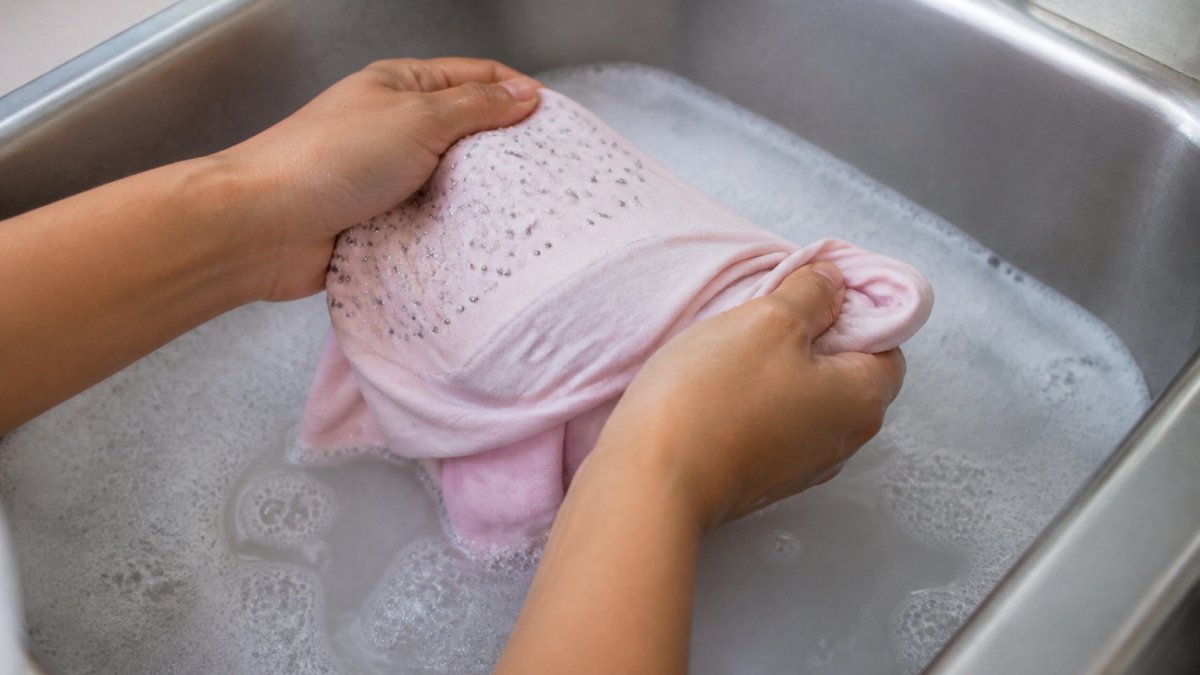
Hand-washing how to wash rhinestone embellished clothing is straightforward. Follow these steps to keep your piece looking new.
Prepare Your Garment
Turn the garment inside out. This keeps the rhinestones facing inward, away from direct water and friction.
Fill a sink or basin with cool or cold water. Cold water is gentler on both rhinestones and fabric dyes. Avoid warm or hot water, which can weaken adhesive and cause colors to fade.
Add a teaspoon or two of mild detergent like Woolite, designed for delicate fabrics.
Wash Gently With Mild Detergent
Submerge the garment and soak for 5-10 minutes. Gently swish through the water without scrubbing or agitating. Gently rub stained areas with your fingers, but avoid the rhinestone side.
Rinse and Remove Excess Water
Drain and refill with clean, cool water. Swish the garment through the rinse water 2-3 times until soap is gone. Gently squeeze out excess water by pressing the fabric between your hands; never wring.
How to Dry Clothes With Rhinestones
How you dry your piece matters as much as how you wash it. Heat and friction are enemies of rhinestone embellishments.
Never use a tumble dryer. Instead, hang the garment on a padded hanger or lay it flat on a clean towel to air-dry. Avoid direct sunlight. Most garments air-dry within 4-8 hours.
How to Clean Rhinestones on Fabric
Sometimes your rhinestone embellished clothing needs spot-cleaning between full washes. Dirt, dust, and minor stains can be treated without washing the entire garment.
Spot-Cleaning Stains
For small stains, use a damp cloth with a tiny drop of mild detergent. Dab the stain gently, don't rub. Rinse with a clean, damp cloth and pat dry.
For stubborn stains, let the damp cloth sit on the stain for a minute or two to loosen it. Then gently dab again. Avoid scrubbing, which can damage the fabric or loosen stones.
If the stain is on the rhinestone side, be extra careful. Work around the stones rather than directly on them. The goal is to clean the fabric, not put pressure on the embellishments.
Treating Odors Between Washes
If your garment smells but isn't visibly dirty, you don't need to wash it. Hang it in fresh air for a few hours. Sunlight and air naturally remove odors.
For stubborn smells, lightly mist the garment with a fabric refresher spray. These products neutralize odors without requiring a full wash. Follow the product instructions and allow the garment to dry completely before wearing.
What to Do When Rhinestones Loosen or Fall Off
Even with careful washing, a rhinestone may loosen or fall off. This happens naturally over time, especially with glued stones. The good news: you can fix it.
If a stone is loose but still attached, you can reinforce it with clear fabric glue. Apply a tiny amount around the base where the stone meets the fabric. Let it dry completely before wearing or washing the garment.
If a stone falls off completely, you have two options. You can replace it with a new rhinestone using fabric glue or a rhinestone setting tool. Craft stores sell replacement rhinestones in various sizes and colors. Or you can leave the spot as is, a missing stone doesn't affect the wearability of the piece, only its appearance.
To prevent future loss, always hand-wash rather than machine-wash, and avoid extended soaking or wringing.
Common Mistakes to Avoid
Here are the biggest mistakes people make when washing how to wash rhinestone embellished clothing:
Using hot water. Hot water weakens adhesive and fades colors. Stick to cold or cool water.
Skipping the inside-out step. Turning your garment inside out is the single most important protective measure. It shields the rhinestones from direct friction and agitation.
Machine-washing on a regular cycle. Regular cycles have too much agitation. If you machine-wash, always use delicate or gentle.
Soaking for hours. Extended soaking weakens glue and can cause dyes to bleed. Five to ten minutes is enough.
Using fabric softener. Fabric softener can coat rhinestones and make them look dull. Skip it entirely.
Tumble drying. Heat and tumbling are the fastest way to damage rhinestones. Air-dry only.
Wringing the garment. Wringing puts stress on seams and can loosen stones. Gently squeeze instead.
Washing too frequently. The less you wash, the longer your piece lasts. Spot-clean when possible and wash only when necessary.
| Mistake | Why It Matters | What to Do Instead |
|---|---|---|
| Hot water | Weakens adhesive and fades color | Use cold or cool water |
| Machine wash on regular cycle | Too much agitation damages stones | Use delicate cycle or hand-wash |
| Extended soaking | Weakens glue and bleeds dyes | Soak for 5-10 minutes only |
| Fabric softener | Coats and dulls rhinestones | Skip softener entirely |
| Tumble drying | Heat and friction damage stones | Air-dry or lay flat |
| Wringing forcefully | Stresses seams and loosens stones | Gently squeeze excess water |
| Frequent washing | Wears out embellishments faster | Spot-clean when possible |
Rhinestone embellished clothing deserves care that matches its quality. When you wash your Sweet Lane LLC pieces using these methods, you're protecting an investment in original design and premium craftsmanship. Turn your garment inside out, use cool water and mild detergent, hand-wash when possible, and air-dry completely. These simple steps keep your daughter's favorite pieces looking sparkly and new for seasons to come. Shop Sweet Lane LLC rhinestone tees and discover how premium hand-applied rhinestones and original artwork combine to create pieces she'll treasure.

Frequently Asked Questions
Can you machine-wash rhinestone clothing?
Machine-washing is possible if you use a delicate cycle, cold water, and protect the garment in a mesh laundry bag. However, hand-washing is safer for premium hand-applied rhinestones because it eliminates agitation and tumbling that can loosen stones. If you choose the machine, skip the dryer entirely and hang dry or lay flat instead.
How do you prevent rhinestones from falling off when washing?
Turn the garment inside out before washing to shield the rhinestones from direct water pressure and friction. Use a mesh laundry bag for extra protection, wash on a gentle or delicate cycle in cold water, and avoid soaking for extended periods. Hand-washing is the gentlest option. Never use fabric softener, as it can weaken the adhesive holding the stones.
How should you dry clothes with rhinestones?
Hang dry or lay flat to dry, never use a tumble dryer, which creates heat and agitation that can damage rhinestones and loosen their attachment. If you hang dry, use padded hangers to prevent stretching. Lay-flat drying works best for delicate fabrics and preserves the rhinestone embellishments longer.
How do you clean rhinestones on fabric without damaging them?
For spot-cleaning, use a soft cloth slightly dampened with cool water and a tiny drop of mild detergent. Gently dab the stain without rubbing. For general cleaning between washes, a soft-bristled brush can remove dust, or use a lint roller on the reverse side. Avoid harsh chemicals and abrasive scrubbing, which can scratch or dislodge stones.
0 comments