
Table of Contents
- Understanding Fabric Composition and Material Quality
- How to Spot Quality Stitching in Clothes
- Identifying Reinforced Construction at Stress Points
- Best Clothing Brands for Tween Girls That Prioritize Durability
- How to Build a Capsule Wardrobe for Tweens
- Cost-Per-Wear Analysis: Making Durable Fashion Affordable
- Care and Maintenance Tips to Extend Garment Life
- Frequently Asked Questions
Last Updated: October 2, 2026
Understanding Fabric Composition and Material Quality
The first step in finding durable tween fashion is understanding what makes fabrics last. Fabric composition directly determines how long clothes survive washing, wearing, and the growth spurts that come with the tween years.
Quality fabrics fall into two main categories: natural fibers and synthetic blends. Natural fibers like cotton and linen breathe well and feel soft against skin. Synthetic fibers like nylon and spandex add stretch and durability.
Look at the label inside every garment. It tells you the exact fiber content. Pure cotton sounds good, but it wrinkles easily and shrinks. A cotton-polyester blend holds its shape better. Nylon-spandex blends (like those used in Sweet Lane's Soft Thin & Lightweight Pants) offer stretch without sacrificing durability, they're made for active tweens who need clothes that move with them.

Weight matters too. Check the GSM (grams per square meter) on the label. Higher GSM means thicker, more durable fabric. A 180 GSM fabric feels light and cool.
Key fabric qualities to prioritize:
- Natural fiber content (cotton, linen) for comfort
- Synthetic blend (spandex, nylon) for stretch and durability
- GSM weight appropriate for the garment type
- Performance features like UPF protection or moisture-wicking
- Smooth finish that resists pilling
How to Spot Quality Stitching in Clothes
Quality stitching is where durability lives. Poor seams fail first, especially in clothes for active tweens. Learning to spot good stitching saves money and frustration.
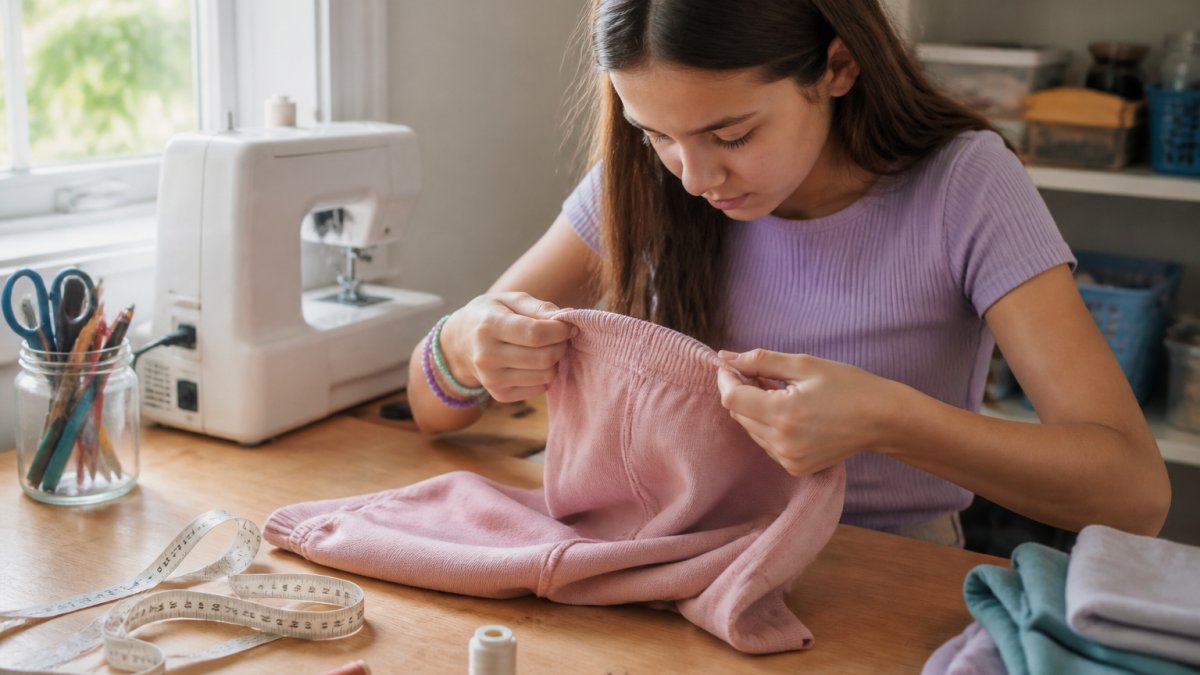
Run your finger along every seam. Good stitching feels smooth and tight. Loose threads, uneven spacing, or gaps between stitches signal poor quality.
Count the stitches per inch. Quality garments have at least 8-10 stitches per inch. You can feel this by running your thumbnail along a seam.
Look at seam finishing.
Check the hems. Double-stitched hems last longer than single-stitched ones. Run your finger inside the hem.
Stitching checklist:
- Seams feel smooth with no loose threads
- 8-10 stitches per inch minimum
- Thread color matches fabric
- Seams are finished (serged or flat-felled)
- Hems are double-stitched at stress points
- No puckering or bunching in seams
Identifying Reinforced Construction at Stress Points
Stress points are where clothes fail first. These are the areas that bend, stretch, and move constantly: armpits, crotch seams, sleeve caps, and waistbands.
Quality brands reinforce stress points with extra fabric layers or additional stitching. Look inside the garment at the underarm seam.
Crotch seams take the most abuse in pants and shorts.
Waistbands should be reinforced with interfacing (a stiff layer sewn inside). This keeps the waistband from stretching out and sagging after dozens of washings.
Check the collar and neckline. Quality garments have a stabilizing tape or interfacing inside the neck seam.
Stress point reinforcement to look for:
- Underarm triangles or extra fabric in armpit seams
- Gusseted crotch in pants and shorts
- Interfaced waistbands that hold their shape
- Reinforced necklines with stabilizing tape
- Extra stitching at collar and hem corners
- Double-stitched seams at high-movement areas
Best Clothing Brands for Tween Girls That Prioritize Durability
Finding durable tween fashion means knowing which brands actually build clothes to last.
Sweet Lane LLC stands out because durability is built into every piece. Their Very Soft Athletic Dress with Matching Shorts uses 230 GSM nylon-spandex fabric specifically chosen for active tweens. The dress includes reinforced seams and comes with matching shorts that have functional pockets, practical details that matter to real girls. Each piece is designed by Lane Marie, the co-founder, who knows exactly what tweens actually wear and how hard they move.

When evaluating any brand for durability, ask these questions:
Does the brand specify fabric weight and fiber content? Transparent brands list GSM, fiber percentages, and care instructions upfront. Vague descriptions like "soft fabric" or "comfortable material" hide poor quality.
Does the brand explain construction details? Quality brands mention reinforced seams, gusseted crotches, or interfaced waistbands. They know these details matter and highlight them.
Does the brand offer care guidance? Sweet Lane's products come with specific washing instructions, gentle cycles and low-heat drying. Brands that care about durability guide you on how to maintain their clothes.
Can you find customer feedback? Real reviews from parents reveal whether clothes actually last. Look for mentions of how many seasons the garment survived or whether seams held up through growth.
Does the brand use ethical, transparent manufacturing? Small-run production and transparent sourcing often signal quality.
Questions to ask about any tween clothing brand:
- What's the fabric weight (GSM) and fiber content?
- Are seams reinforced at stress points?
- Does the brand provide detailed care instructions?
- Can you find parent reviews about longevity?
- Is manufacturing transparent and ethical?
How to Build a Capsule Wardrobe for Tweens
A capsule wardrobe solves the growth-spurt problem. Instead of buying lots of trendy pieces that fall apart, you buy fewer, higher-quality basics that mix and match.
Soft Thin & Lightweight Pants for Year Round →
Start with neutral basics. Five to seven solid-colored tees in white, gray, black, and navy form the foundation.
Add layering pieces. A lightweight sweatshirt or cardigan extends the life of basic tees by creating new outfit combinations. Look for pieces in neutral colors that coordinate with everything. [Sweet Lane's Shorts and Top Set](https://www.candyartdesigns.com/products/shorts-and-top-set-cotton-candy) works as both a complete outfit and separate pieces that layer with other garments.

Include bottoms in neutral colors. Two pairs of durable pants (one darker, one lighter) and two pairs of shorts cover most situations.
Add one or two statement pieces. This is where personality comes in.
Invest in quality shoes. Two pairs of everyday shoes (sneakers and slip-ons) plus one dressier option cover most needs.
Capsule wardrobe starter list:
- 5-7 basic tees in neutral colors
- 1-2 layering pieces (sweatshirt, cardigan)
- 2 pairs of durable pants
- 2 pairs of shorts
- 1-2 statement pieces with personality
- 3 pairs of shoes (casual, everyday, dressy)
Cost-Per-Wear Analysis: Making Durable Fashion Affordable
The real cost of clothing isn't the price tag, it's the cost per wear.
Calculate cost-per-wear by dividing the price by the number of times your tween will wear it.
Durable tween fashion saves money over time because pieces last through multiple seasons, multiple kids, or resale.
Factor in growth. Tweens grow fast. A poorly-made garment that lasts one season before falling apart is a total loss.
Consider versatility. Pieces that mix and match with multiple outfits get worn more often, lowering cost-per-wear.
Look for sales and investment timing. Quality brands often discount seasonal items.
Cost-per-wear calculation:
- Garment price ÷ number of wears = cost per wear
- Example: $60 dress ÷ 40 wears = $1.50 per wear
- A $20 dress worn 10 times = $2 per wear
- The more expensive, durable option is cheaper in the long run
Care and Maintenance Tips to Extend Garment Life
How you care for clothes matters as much as how they're made.
Wash less frequently. Clothes last longer when washed less often.
Use gentle cycles. Machine wash on delicate or gentle cycles with cold water. Hot water weakens fibers and causes fading. Cold water preserves color and fabric integrity. Sweet Lane's care instructions recommend delicate cycles for good reason, they protect the fabric and stitching.
Wash inside-out.
Skip the dryer when possible. Tumble drying damages fibers over time. Hang-dry clothes on a line or rack.
Treat stains immediately. Fresh stains come out easier than set-in ones.
Store properly. Fold clothes neatly or hang them on proper hangers. Tight hangers create permanent creases.
Repair small problems quickly. A loose button or small seam tear is easy to fix.
Garment care checklist:
- Wash on gentle cycle with cold water
- Wash inside-out to protect outer surface
- Spot-clean instead of washing when possible
- Hang-dry or use low-heat dryer
- Treat stains immediately before drying
- Fold and store properly to prevent creases
- Repair small damage quickly before it spreads
Frequently Asked Questions
What fabrics are best for durable tween clothing?
Natural fibers like organic cotton and blended performance fabrics offer the best durability. Look for nylon-spandex blends (like the 86.9% nylon / 13.1% spandex composition found in quality everyday wear) that provide stretch and resilience through repeated wear and washing. Heavier fabric weights—around 180-230 GSM—resist pilling and thinning better than lightweight alternatives. Avoid pure synthetic fast fashion fabrics that break down quickly.
How can I tell if tween clothing will last through multiple size transitions?
Examine the seam allowances—quality pieces have wider, reinforced stitching at stress points like underarms, crotch, and shoulder seams. Check if the fabric has adequate stretch (spandex content) to accommodate movement during growth spurts. Look for functional design features like adjustable waistbands or drawstrings. Calculate cost-per-wear: if a piece costs $48 and she wears it 100+ times, that's less than $0.50 per wear—making it worthwhile even if she outgrows it in a season.
What's the difference between boutique brands and fast fashion for durability?
Boutique brands invest in higher-quality fabric composition, reinforced stitching, and thoughtful construction details. They typically use performance fabrics with UPF protection and cool-to-the-touch technology. Fast fashion prioritizes low cost over durability, using thinner fabrics and minimal seam reinforcement. Boutique pieces often feature original artwork and custom design.
How should I wash tween clothing to make it last longer?
Use a delicate cycle with cold water and mild detergent to protect fabric integrity and prevent color fading. Hang dry or tumble dry on low heat to avoid shrinkage and stress on fibers. Turn garments inside out before washing to reduce pilling and protect printed designs or rhinestone embellishments. Avoid fabric softeners, which break down elastic fibers. For performance fabrics with UPF protection, gentle washing preserves the sun-protective coating.
Finding durable tween fashion doesn't mean spending a fortune on every piece. It means understanding what makes clothes last, quality fabric, reinforced construction, and proper care. Sweet Lane LLC builds this durability into every garment, combining soft performance fabrics with thoughtful design details that tweens actually want to wear. Start with the basics, invest in pieces you love, and maintain them properly. Your tween will have clothes that grow with them, season after season.
0 comments